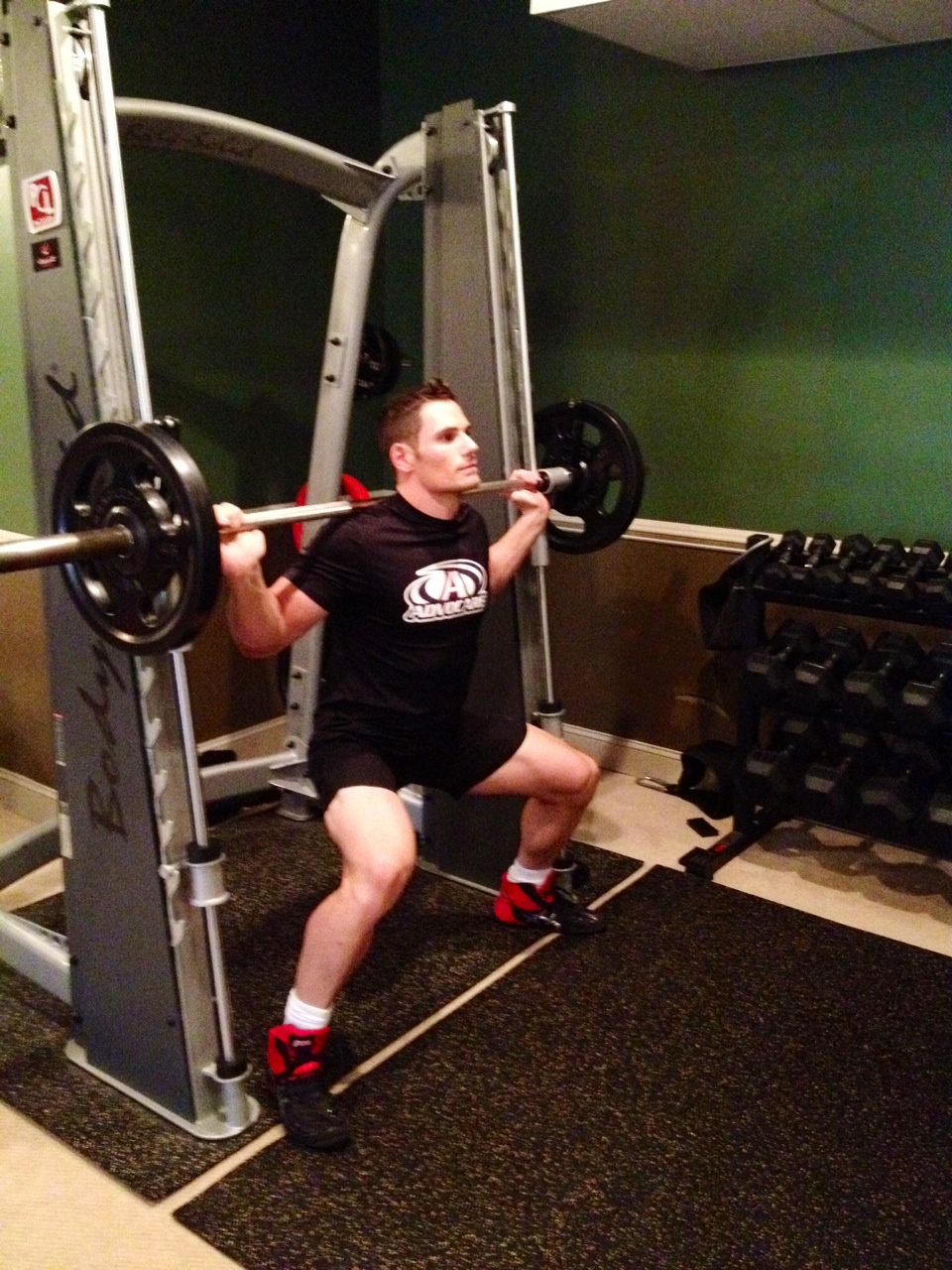
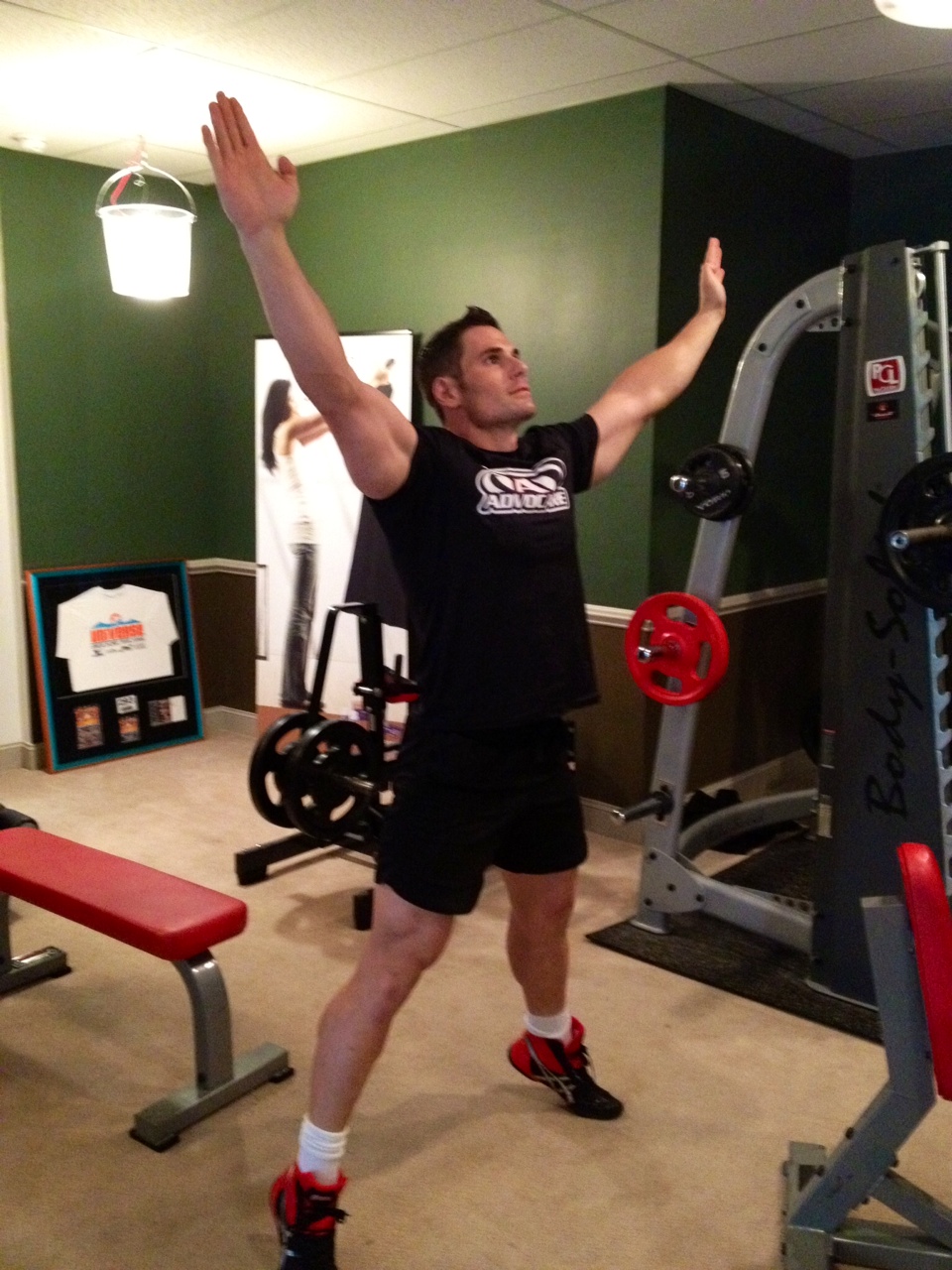
Showing posts with label Muscle. Show all posts

Thursday, July 17, 2014

Surreal Exercise Tip of the Month


Biceps: The Sun's out, so bring the Guns out! 

Hello Team Surreal.. Hope you all are having a great July! 
The sun is out, so short sleeves or tank tops are becoming worn more by both women and men. What's a better way to motivate you to pull that top out of the closet, than when you feel confident about your arms and how they look in one?  I decided to share a few tips about getting the best results when training the arms. 

Keep in mind the three ways to increase muscle mass: lift heavy, lift fast or perform a lot of reps. Any of these options will work well, and based on your specific needs, you can choose the way that works best for you.

If you can't lift heavy due to an injury, then chose one of the other options. Lifting heavy does not mean you have to lift the heaviest tier of dumbells, it just means you must lift heavy for you. Whether that means 20 pounds gets it done for you, or if you need 80 pounds, push yourself to achieve max results from this style of lifting. 

 You shouldn't do the same exercises over and over again; switch the exercises up changing the angle of force placed on the biceps. For example, start your routine with standing barbell curls and then progress to preacher curls or a dumbbell curl, such as a hammer curl. Keep in mind, you can perform unilateral (one arm) isolation exercises to give yourself the balance between bilateral (two arm) exercises. This balance of exercise variety style helps to ensure you are not over compensating with the strength of just one arm, still commonly seen with all exercise experience levels.

Zeke Samples, IFA, CSN, CPR, IDEA
NPC Physique Competitior
Surreal Body Solutions, LLC
& contributing health and exercise author

Personal Training | Nutrition | Supplements | Motivation


Wednesday, August 28, 2013

Vitamin D and Calcium: A Healthy Partnership

Increasing bone density is important for our physical health and as we all age.  Calcium is critical in building bone health and density, Vitamin D is needed for the body to absorb this Calcium.  Knowing how much Calcium and Vitamin D are needed to maintain bone health is why I decided to write the Surreal blog for today. I wanted to suggest a few ways to get more of both in your diet, if you need them, and where you should start. 


According to the National Institute of Arthritis and Musculoskeletal and Skin Disease, a division of the National Institute of Health, “low Calcium intake throughout life is associated with low bone mass and high fracture rates.”   According to findings from the CDC last year, about 1/3 of all Americans are deficient in Vitamin D. 

Take a look at these recommendations and assess your own diet, then determine whether you need more or less.  

Good Sources of Vitamin D

  • Sunlight
  • Supplements
  • Food
    • Cod Liver Oil
    • Fatty Fish (Swordfish, Salmon, Tuna, Mackerel)
    • Orange Juice or Milk
    • Eggs (Vitamin D is in the yolk)
    • Dairy Products; Cereals

Good Sources of Calcium:

  • Dairy Products
  • Fortified Cereals and Soy Beverages
  • Tofu
  • Spinach, Soy Beans, Beet Greens & Collards
  • White Beans
I know that healthy Calcium and Vitamin D levels can help the body tremendously with exercise strength, response to weight control, and of course in helping to support joints and structures of the body.  It is always best to get your vitamins from 'real foods' over processed, or supplements, but making sure the healthy levels are in the body is the first step down the road to better health.  

Zeke Samples - IFA, - IDEA Personal Trainer
Fitness and Wellness Author
Surrealbody@gmail.com

Tuesday, April 30, 2013

Pre-Exercise Stretching Importance

 Did you know pre-exercise stretching is generally unnecessary and likely counterproductive?  Most people stretch to prime muscles for the workout to come, but there are some misconceptions that stretching before an activity will prevent injury.

Muscles may actually lose flexibility when they are overworked.  This can create a risk for decreased strength, especially if you are doing weight-bearing activities.  
  
Most people should consider adding more warm-up routines and cutting back from intensive stretching before exercise.  For example, an exercise that includes light stretching, like jumping jacks, can prepare the body for intensive activity without making the muscles vulnerable to overwork.  Then spend more time on recovery stretching afterwards.  

"If someone is jogging or walking, I recommend a gentle warm-up that takes less than a minute to stretch the quadriceps, hamstrings and calves," says Richard Cotton, the national director of certification at the American College of Sports Medicine (ACSM). "I feel better when I do that, but I wouldn't mandate it for every client. There is value in stretching to increase range of motion and enhance activities of daily life."
 
Stretching has benefits because when combined with flexibility training it can give people a wider range of motion in their joints.  This can help in daily activities, balance and posture, which are important in preventing falls and injuries as people age.  I can help tailor the amount and type of stretching based on your individual need.


In Health, 
Zeke Samples - IFA, - IDEA
Contributing author for www.FitAphrodite.com
surrealbody@gmail.com


Wednesday, March 20, 2013

5 Exercises to Increase Leg Strength

  For a lot of people, having strong legs isn’t their goal; rather, they are searching to have a maximum quantity of leg power. The difference between having a high quantity of leg power and a high quantity of strength is that if you’ve got very powerful legs, you will be able to press a great deal of weight over a short time of time.

  Essentially, you can create a high quantity of force and create that force quickly. This comes in very helpful if you’re involved in a higher quantity of sports that require you to be strong and quick at the same time.

  In order to develop this physical characteristic, its important that you adjust your training accordingly since there’s certain aspects you need to touch upon to get a high degree of leg power.
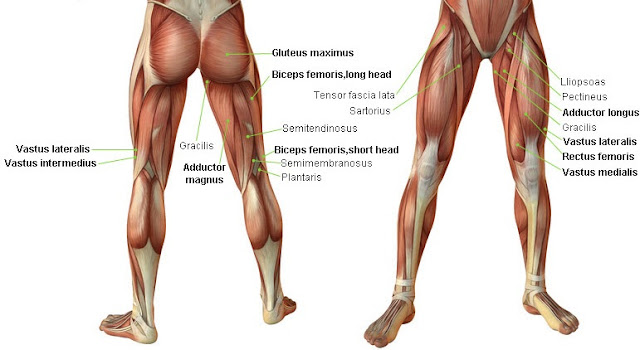

The Exercises

1. Heavy Squats Or Leg Press:
  To best achieve a high level of power, you want to be both quick and strong. Many of the exercises below are not going to stress maximum strength to a huge degree, so its important to perform at least one exercise where you will lift as heavy as possible.  

2. Barbell Squat:
 Since squats put you in your strongest position (or the leg press  for those who struggle with squat positioning), perform this exercise for a rep range of 5-8 reps lifting as heavy as you possibly can. Do 3-5 sets of these and you’ll be well on your way to develop a very solid strength foundation. 

3. Leg Press:
  Following a good rest after doing the squats (at least 3-5 minutes to fully recover), next you want to move into jump squats. These won’t be performed with much weight if at all (you can wear a weighted vest if desired), but will focus on maximum quickness and explosiveness.

4. Freehand Jump Squat:
  When doing these, you want to jump up off the ground as high as possible while reaching the arms above your head to help increased the entire movement pattern. 

5. Calf Raises With A Quick Eccentric Component: 
  One factor that lots of people forget about is the role that calves will play in generating power. Since this is the final link of the chain when you perform type of run or jump, its vital that this muscle is also trained for power.
  To do this, you want to perform your standard sitting or standing calf raise with a heavy weight, but focus on really making the concentric portion of the exercise (where the muscle shortens – in this case when you rise up) as fast as possible. Then pause for a moment when you’re at the top and slowly lower to a count of two or three seconds.  

6. Seated Calf Raise:
  Repeat this process for 12-15 reps for a total of three to four sets. If you really want to make things challenging for yourself, consider doing it with one leg calf raises as well. 

7. Uni-Lateral Standing Calf Raises:
  Using One leg at a time, hold the wall, something stable, or keep the ball of the foot on the step of a staircase while allowing the heel to lower.  Point the toe in slightly (pigeon-toed) and elevate the foot to horizontal (halfway), briefly pause, then elevate to full extension.  Lower with one single movement.  So “2 Parts going up; 1 Part going down”.  Try 15 reps for each leg, alternating legs, for 3-5 Sets.  When the bodyweight gets to be too easy, you can hold a dumbbell in the hand of the same side that the calf is being exercised to increase difficulty, but you will be amazed at what you feel with just your own bodyweight and the 2 Part movement with the pause midway.

8. Tempo Hamstring Curls:
  While both the quads and hamstrings will be worked when you perform a squat, to zero in and focus on purely the hamstrings, adding some tempo hamstring curls to the program will also be a good idea.  For these, focusing on maintaining a constant speed throughout the entire movement so there’s a constant tension on the muscle tissue. A tempo of 3-0-3 will work well, but you can extend this to 4-0-4 if you really want to slow things down. 

9.  Lying Leg Curls
  Perform two sets in this manner and then supplement that with another two sets where you shorten the tempo to a 1-0-1 or 2-0-2 (you may must adjust the weight for these ones). This will give a good mix and train the muscles to effectively fire at unique rates. 

10. Interval Sprints:
  Finally, the final way to really boost your leg power is to perform interval sprints. Ideally you would want to do these at a completely separate time than you do your leg weight workout however since weight training will slow the muscle tissues down making it very difficult to work to maximum effectiveness with sprints.  Perform your sprints either later in the day or on an entirely unique day altogether depending on your overall workout set-up. Aim to sprint for 10-20 seconds at 100% effort and then rest for 30-60 seconds accordingly. You are not aiming to sprint lengthy but rather focusing on being as quick as possible off the absolute start.

Conclusion:

So if you’re searching to boost your leg power, make sure you’re including these exercises. Avoid doing too much leg work though as training for explosiveness is somewhat stressful on the body and you could quickly get yourself overtraining if you are not careful. Two sessions a week will be more than enough and it would be ideal if these are separated via two days in between workouts.

Sample Leg Workout:

Squats/Leg Press: five sets of 5-8 reps
Jump Squats: three sets of 10-15 reps
Calf Raises: four sets of 12-15 reps
Leg Curls (Fast): 30 seconds
Leg Curls(Slow): 45 seconds
Interval Sprints

- Zeke Samples, IFA, IDEA


Thursday, February 14, 2013

Valentines Day Workout: Get your Heart Going Before Your Date


Valentine’s Day: A Day where you get to show that special someone just how much you care for them by doing some sort of romantic gesture.  Dining out, a loving gift, or keeping it simple and doing something unexpected and out of the ordinary.
The Valentine’s Day Workout I am about to share with you is designed to do ONE thing:
Increase blood flow.
The Goal?
- To bring as much blood flow as possible into the muscle cells, causing the muscles to expand and appear full.  This 'look' will be temporary, but guess what:  You can use it any time you like to get a pumped look.  The workout consists of higher reps, so it isn't one that is designed to build strength, or lose fat primarily. We use this as a 'circuit style' of training, very similar to what male models do immediately before stepping on stage for a competition, or during a photo shoot.  
The End Result?
- Get you looking the most pumped that you can for this one night.
Incline Barbell Bench Press: 2 Sets (8-10 Reps)
Cable-Crossovers: 2 Sets (12-15 Reps)
Push-Ups: 2 Sets (Reach Failure)
Wide Grip Pulldowns: 2 Sets (8-10 Reps)
Under-Hand Bent Over Row: 2 Sets (12-15 Reps)
Side Lateral Raises: 4 Sets (15 reps, Pausing 15 Seconds between Sets) Note: Perform All Sets
Shoulder Press: 2 Sets (8-10 Reps) Yes...After the Laterals..Not Before
Dumbbell Bicep Curls: 2 Sets (15-20 Reps)
Tricep Press-Downs 2 Sets (15-20 Reps)
Leg Raises (Lower Abs) 3 Sets (15-20 Reps) Note: Weighted if Possible: Pick a weight that causes failure within this Rep Range
Crunches (Upper Abs) 5 Sets (15-20 Reps) Note: Weighted if Possible: Pick a weight that causes failure within this Rep Range
This workout is great for additional 'Impression Moments': 
Use this prior to walking the beach...Going for a Shirt-Less Run, Hanging out on the Lake..you get the idea.. ;)
Have a Safe, Fun, and Loving Time Tonight!
- Zeke Samples


Thursday, January 24, 2013

Burned-Out on Squats? 3 Alternatives Yielding Results, Go Ahead, Change It Up..We Do..

3 Alternatives to Squats.  Call them Alternatives; Call them Upgrades; Call them Names..!! :)
Whatever you do, they will provide a different approach and a mental break from the "Norm" of the typical exercises.

JUMP SQUATS:

Facts:

- Jump Training primarily activates fast-twitch muscle fibers (the muscle fibers that involve explosiveness and don't rely on lots of weight).

Directions:

Stand with feet hip-width apart; lower your butt towards the ground until your heels dominate the momentum of the lowering of your body; do not lift the heels to transfer your weight to the toes.  Keep your back flat; keeping the eyes straight ahead helps the balance of the body as well. Pause briefly at the bottom of the movement and then jump up quickly, fully extending your legs. Land softly on your mid-foot and roll back towards your heels to repeat the movement. Start with 10 to 15 jumps and see what you can do.

Fitness Ball Leg Curls (Hamstrings):

Facts: 

- Add a dynamic component to your hamstring workout by swapping the leg curl machine for a fitness ball


Directions:

Lie on your back with legs extended, lower leg on an exercise ball. Extend arms out to sides. Raise your hips up off the ground by pressing down on the ball with your lower legs and heels until your body forms a straight line: shoulders, hips and ankles should line up. Roll the ball towards you by bending your knees; pull your heels toward your butt. Allow your feet to roll up on to ball. Slowly lower to original position by straightening knees; repeat 12 to 15 times
.

Seated Calf Raises (Over Standing Version)

Facts:

- Standing raises only work the outer calf muscles.  The seated version works the flexor muscle group deep in the calf, which stabilizes the ankle and helps prevent ankle sprains.


Directions:

Sit on a chair or bench with toes rested on a step or ledge in front of you -- heels should be on the ground and the step should be high enough for you to feel a stretch in your calf muscle. Place dumbbells or a barbell across your thighs near the knees added resistance. Hold the weights in place with your hands as you raise your heel off the ground, squeezing your calf muscles. Pause and slowly lower heels back down until you feel a stretch. Repeat 12 to 15 times
.

- Zeke Samples


Friday, November 9, 2012

Zeke's Full-Body Exercise: Legs, Arms, Shoulders, and Core in One Movement

I decided to share this exercise today because it can be a great full body movement when the time in the gym is short for you.
Don't skip a workout - combine movements and still burn calories!!
This movement can be performed with or without the sissy squat device you see in the photo.  The purpose of the sissy squat device is to ensure and provide a perfect squat form during the range of motion. The knees are safely behind the feet (plane of the toes) as your body lowers.  A "perfect" squat form does just this. 
When the knees are in front of the toes as you squat, there is a risk of more pressure and weight support distributed on the knee cap potentially leading to sore knees, and possibly inflammation over time.

Form:
Squat down to a range of motion where legs are bent to 90 degrees.  
Alternate Way: You could place a bench behind you and lightly tap/lightly sit on the bench as you squat for safety if desired.
While at the bottom of the range of motion, dumbbells should be by your side. 

NOTE: Palms can be open (as in photo #1), or palms can be vertical (as in photo #2).
 
Next, while standing, curl the dumbbells to the shoulders (photo #3) and rotate the wrists to twist the dumbbells overhead (photo #4).  
Those of you who train with me know this as an Arnold Shoulder Press. 


Repeat this Exercise 3-4 SETS for 15 Repetitions
- You will be fatigued and short of breath, this is common.  The results to the entire body in a short period of time, will be rewarding and you will accomplish a lot with such a multi-functional move.  Let me know how it works for you below. 
ACHIEVE THOSE GOALS!! 

- Zeke Samples -


Monday, October 15, 2012

2-Part Tricep KickBack for Tone and Shape

This is not only a great exercise for shaping the triceps in a popular area of the arm for many females wanting more tone and firmness, but also a re-defining; a new chapter perhaps, of an exercise that has been around for years. 
I find a common desire with my female clients is to tone the back of the arm.  This exercise will add one non-traditional movement at the end, that when done correctly, will produce faster results in toning and tightening the Triceps (back of the arm).

START (Part 1)
 Starting with one knee on the bench and the upper body being supported by locking out the non-exercising arm, start with the exercising arm bent in a 90 angle at your side.  
The elbow remains in place while you are performing the arm extension-Part 2 Below.

Part 2
Arm will extend to fully locked position to engage the triceps muscle in the back of the arm.  This is the typical ending of one repetition to the old form of this exercise.  My form requires one more motion:

Part 3 
With arm fully extended (from Part 2), physically extend the straight, locked arm as high up as you can toward the ceiling.  This additional movement will provide an additional burn at the top of the triceps, creating a faster result in toning and arm definition.  
NOTE: To repeat movement, remember that the elbow has to stop by the side of the body again, 
before lowering the dumbbell directly below the shoulder (Start Position/Part 1).

Light Weights are Better than Heavy Weights for This Movement
Sample Exercise Set: 4 Sets Each Arm, 12-15 Repetitions

- Zeke Samples -


Friday, September 14, 2012

4 Exercises to Increase Leg Strength


For lots of people, having strong legs isnt their goal.  Instead, they are searching to have a maximum quantity of leg power. 
The Difference:
High Quantity of Power: Challenging Weight Over a Short Time
(create a high quantity of force and create that force quickly)
This comes in very helpful when involved in sports that require you to be strong and quick at the same time

High Quantity of Strength: Challenging Weight Over an Extended Period of Time
In order to develop this physical characteristic, its important that you adjust your training accordingly since there’s certain aspects needed to get a high degree of Leg Power.
The Exercises

1. Heavy Squats Or Leg Press:
      To best achieve a high level of power, you want to be both quick and strong. Many of the exercises below are not going to stress maximum strength to a huge degree, so its important to perform at least one exercise where you will lift as heavy as possible.  

Barbell "SUMO" Squat
 Since squats put you in your strongest position (or the sumo squat stance for those who struggle with squat positioning), perform this exercise for a rep range of 5-8 reps lifting as heavy as you possibly can. Do 3-5 sets of these and youll be well on your way to develop a very solid strength foundation. 3-5 sets at 5-8 reps
 Stance: Feet pointed out at a comfortable angle. IMPORTANT: Make sure the knees point out (as you squat down) in the same direction that the feet are pointing.  Chest up; Hips back (imagine lowering to sit in an imaginary chair).  


Leg Press
 Great alternative to Squat for those who would like more Back support.  Feet Shoulder width apart; When lowering platform, do not allow the Knees to be above the feet.  Place the feet high enough so that your legs are at a 90 degree angle at the bottom.  Same reps and sets as Sumo Squats. 


Freehand Jump Squat

Following a good rest after doing the squats (at least 3-5 minutes to fully recover), next you want to move into jump squats. These won’t be performed with much weight if at all (you can wear a weighted vest if desired), but will focus on maximum quickness and explosiveness.

When doing these, you want to jump up off the ground as high as possible while reaching the arms above your head to help increased the entire movement pattern. 
4-5 sets at 12-15 reps
 

Seated Calf Raise
  One factor that lots of people forget about is the role that calves will play in generating power. Since this is the final link of the chain when you perform type of run or jump, its vital that this muscle is also trained for power.
  To do this, you want to perform your standard sitting or standing calf raise with a heavy weight, but focus on really making the concentric portion of the exercise (where the muscle shortens – in this case when you rise up) as fast as possible. Then pause for a moment when you are at the top and slowly lower to a count of two or three seconds.        Repeat this process for 12-15 reps for a total of 3-4 sets. 3-4 sets at 12-15 reps

SAMPLE WORKOUT:
Squats/Leg Press: five sets of 5-8 reps
Jump Squats: three sets of 10-15 reps
Calf Raises: four sets of 12-15 reps

- Zeke Samples -


Wednesday, July 25, 2012